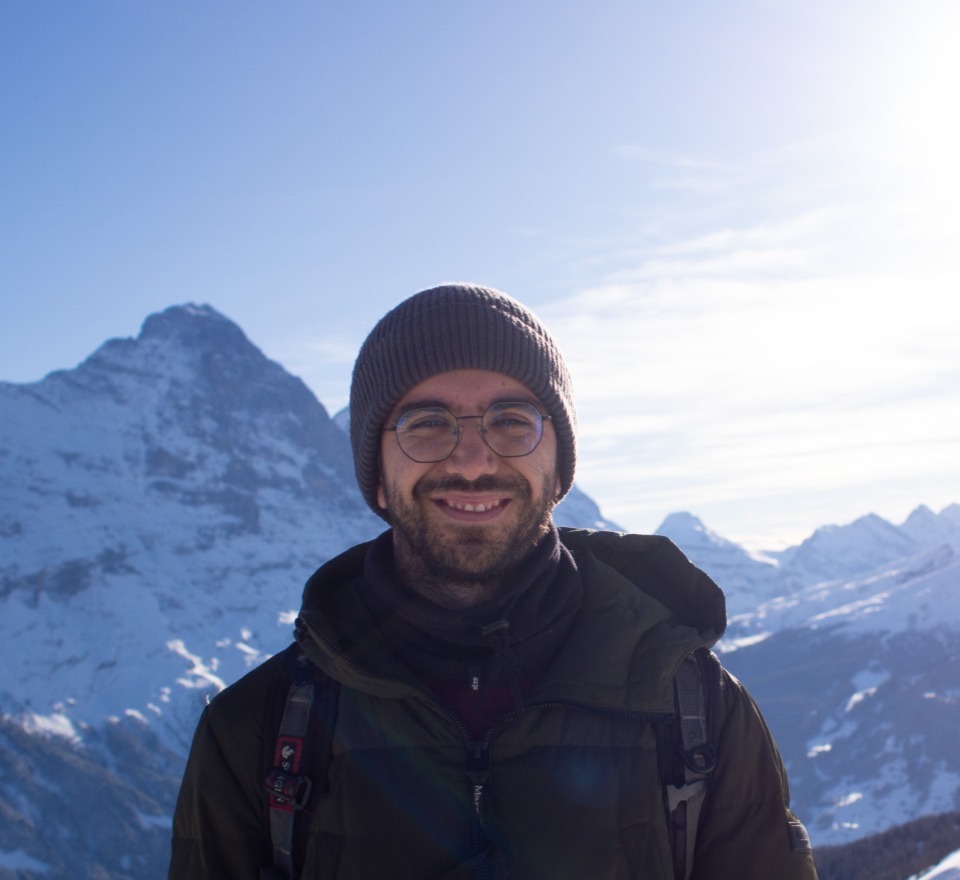
I am a postdoctoral researcher in the Denison Lab at the Department of Psychological & Brain Sciences, Boston University. You can reach me at cnoluk@gmail.com. Here is my CV.
My research focuses on building robust and scalable computational models of human visual perception. I develop principled, interpretable models (e.g., Bayesian Ideal Observers) and test predictions against behavioral data from tasks incorporating high input complexity (challenges inherent in natural signals) and output complexity (measuring the multivariate nature of percepts). I am also interested in the theory of scalability and robustness of computational principles from the lab to real-world settings and broadly interested in human behavior and its underlying neural mechanisms (e.g., confidence and consciousness).
You can check out my Google Scholar profile and see some of the models.
Latest news
- 2026 — Started as a postdoctoral researcher at Boston University with Prof. Rachel Denison.
- 2026 — Awarded the TÜBİTAK 2232-B International Fellowship for Early Stage Researchers.
- 2026 — Published a book chapter with Michael Herzog: Discreteness versus continuity of conscious perception in Comprehensive Consciousness (2nd ed.), Elsevier.
- May, 2026 — Co-authored a presentation at VSS: Evidence for winner-take-all dynamics in long-lasting visual integration.
- April, 2026 — Gave an invited talk at the Department of Neuroscience, Bilkent University: Finding Scalable Principles of Vision: Computational Mechanisms of 3D Surface Slant Estimation.
- February, 2026 — Gave an invited talk at the Department of Psychology, Bilkent University: Towards Scalable Computational Principles of Perception: Modeling Human Behavior Under Realistic Task Complexity.
- August, 2025 — Presented a poster in ECVP: Evaluating ideal observers for large target identification tasks under additive white noise
- August, 2025 — Presented a poster in Systems Vision Science Symposium: Maximum likelihood estimates in visual categorization tasks are biased when pairwise discriminabilities are imbalanced.